Mental Health Awareness Week | Belonging Matters
Have you ever felt like you belonged somewhere, but still felt like you didn’t quite fit in?
You might have friends, a job, people who care about you and a life that looks perfectly fine from the outside. You might be doing all the things you’re supposed to do. You might even be someone other people describe as capable, independent or successful.
And yet, there can still be this feeling that you’re somehow a little bit different. That you’re working from a set of instructions nobody else seems to need. That everyone else has figured something out that you missed.
For some of us who are autistic, have ADHD, or are AuDHD, that feeling can be difficult to put into words.
This Mental Health Awareness Week, the theme is Belonging Matters. It’s something I’ve been thinking about through the lens of late diagnosis, masking and what it means to feel comfortable being yourself around other people.
Because belonging isn’t necessarily about whether you’re included in a group. Sometimes it’s about whether you feel you can actually be yourself once you’re there.
When fitting in comes at a cost
One of the things I’ve been reflecting on since my AuDHD diagnosis is how much of my life I’ve spent trying to understand myself and the way I experience the world.
Before you have the language to explain why certain things feel difficult, it’s easy to turn those experiences into something personal.
Maybe you think you’re too sensitive. Maybe you wonder why social situations leave you exhausted. Maybe you feel like you’re constantly trying to get things right, watching other people and working out what you’re supposed to do.
You learn to adapt. You pay attention to how other people behave. You try to meet expectations. You learn which parts of yourself seem acceptable in different situations and which parts you might need to hide.
For many neurodivergent people, this can become a form of masking: consciously or unconsciously changing how we behave to fit social expectations or avoid standing out.
Masking doesn’t look the same for everyone. It might involve rehearsing conversations, suppressing natural movements, copying other people’s behaviour, forcing eye contact, hiding difficulties or trying very hard to appear as though everything is fine.
And sometimes, you might not even realise you’re doing it.
The complicated part is that masking can help us navigate environments where we don’t feel understood or accepted. It can help us get through a workday, a social event or an unfamiliar situation.
But constantly monitoring yourself can also be exhausting. When you’re spending so much energy trying to appear as though you fit in, there might not be much energy left for simply existing. And if people only see the version of you that you’ve carefully learned to present, it can become difficult to know whether they really know you.
What happens when you don’t know why things feel difficult?
Late diagnosis can bring a lot of different emotions.
For some people, discovering they’re autistic, have ADHD or are AuDHD brings relief. Things that previously felt confusing start to make sense. You find explanations, language and other people whose experiences sound familiar.
But there can also be grief, frustration, anger or sadness about the years before you had that understanding.
You might look back at situations you struggled with and wonder what would have been different if you’d understood yourself earlier.
You might reconsider relationships, work experiences, education or the amount of energy you’ve spent trying to meet expectations that didn’t account for your needs.
You might even feel frustrated that you spent so long believing certain difficulties were personal failings.
For me, understanding my AuDHD has given me a different lens through which to look at my experiences. It hasn’t magically explained everything or made every challenge disappear, but it has helped me ask different questions about myself.
Instead of assuming that I simply need to try harder, I can start exploring what I need, what drains my energy and what helps me function in a way that is more sustainable.
That shift matters. Understanding yourself doesn’t mean you suddenly have everything figured out. Sometimes it means finally having permission to be curious about why you’ve experienced things the way you have.
And sometimes it means being kinder to the person you were before you had the words to explain any of it.
Belonging isn’t the same as being good at fitting in
I think it’s worth considering the difference between fitting in and belonging.
Fitting in can mean learning the rules, adjusting your behaviour and working out how to be accepted. Belonging feels different.
It’s being able to participate without constantly monitoring yourself. It’s being able to ask a question without worrying that you’ve misunderstood something obvious. It’s knowing that you can communicate differently, need some time alone or find something overwhelming without immediately feeling that you have failed.
It’s being around people who don’t expect you to explain every difference before they’ll respect it.
Of course, no relationship or environment will meet every need perfectly. We all compromise, misunderstand each other and have moments when we feel out of place.
But there is a difference between occasionally adapting to other people and feeling as though you must continually hide parts of yourself to be accepted.
For neurodivergent people, that distinction can be particularly important.
You can be included in a group and still feel isolated. You can have people around you and still feel misunderstood. You can be appreciated for what you contribute while feeling that the parts of you that struggle must remain hidden.
That’s why I think conversations about belonging need to go beyond simply inviting people into a space. We also need to think about what happens once they get there.
What does belonging look like for an AuDHD adult?
I don’t think there is one universal answer to this. The things that help one neurodivergent person feel comfortable might be completely different from what another person needs.
But I think belonging can begin with some fairly ordinary things.
It’s being able to say that you’re overwhelmed without feeling you have to justify it.
It’s being able to communicate your needs without worrying that people will see you as difficult.
It’s having friendships where you don’t need to be available all the time to prove that you care.
It’s being able to enjoy your interests without feeling embarrassed about how much you love them.
It’s being allowed to participate in ways that work for you, whether that means speaking up, taking time to process, moving around, communicating in writing or stepping away when you need a break.
It’s being around people who are willing to understand you rather than expecting you to do all the work of adapting.
And sometimes, it’s finding a community of people who understand an experience you’ve spent years struggling to explain.
That doesn’t mean everyone in a neurodivergent community will automatically understand you, or that belonging has to come from finding people with the same diagnosis.
It means finding relationships and environments where differences can exist without automatically becoming problems that need to be corrected.
Mental health isn’t just an individual responsibility
When we talk about mental health, it’s easy to focus entirely on what individuals can do to cope.
We talk about self care, routines, exercise, boundaries and finding strategies that help us manage stress.
Those things can be valuable. I know that understanding yourself and finding approaches that work for your brain can make a difference.
But I also think we need to ask questions about the environments people are trying to cope within.
Are expectations clear?
Are different communication styles respected?
Can people ask for support without being treated as though they’re asking for special treatment?
Are sensory needs taken seriously?
Are people allowed to take breaks, set boundaries and participate differently?
Do we value people for who they are, or primarily for how well they can meet expectations?
For neurodivergent people, wellbeing isn’t just about learning to cope better with a world that feels difficult to navigate. It can also involve finding ways to make that world more accessible and finding people who don’t require us to hide so much of ourselves.
We can’t always change every environment we’re in. We can’t control how everyone responds to us.
But we can pay attention to the spaces where we feel more comfortable, the relationships that allow us to be ourselves and the ways we might create more accepting environments for others.
Finding your people, and learning to be kinder to yourself
I don’t think discovering you’re AuDHD automatically means you suddenly find your people or feel completely comfortable being yourself.
Self-understanding is a process. So is unlearning the expectations you’ve carried for years.
You might need time to work out which parts of your life still fit, which things you’ve been doing out of obligation, and which boundaries or accommodations might help you feel better.
You might find community through friendships, online spaces, creative interests, work or conversations with people who have had similar experiences.
You might also discover that some relationships or environments feel different once you understand yourself better.
There isn’t a deadline for figuring all of this out.
And belonging doesn’t have to mean finding one perfect group where you’ll never feel misunderstood again.
Sometimes it’s a collection of small moments. A conversation where you don’t have to explain yourself quite so much. A friendship where silence isn’t awkward. A person who accepts that you need to do something differently. A space where you can be enthusiastic, quiet, overwhelmed, uncertain or completely yourself without feeling that you have to perform.
Sometimes belonging starts with the relationship you have with yourself.
With learning to recognise your needs rather than automatically dismissing them. With questioning the idea that every difficulty means you’ve done something wrong. With allowing yourself to find approaches that work for you, even when they’re different from what other people do. You deserve that understanding, too.
A thought for Mental Health Awareness Week
This year’s theme, Belonging Matters, has made me think about how many people might be going through their lives feeling that they need to change themselves to be accepted.
We might not always recognise it from the outside. Someone can look confident, capable and socially connected while privately working incredibly hard to navigate experiences that other people don’t see.
We can’t know everything someone is carrying.
But we can make more room for difference. We can listen when people tell us what they need. We can question the assumption that everyone should communicate, work, socialise or participate in the same way.
And we can remember that inclusion is about more than allowing someone to be present. It’s about creating environments where they have a genuine opportunity to feel accepted.
If you’re reading this as someone who is autistic, has ADHD or is AuDHD, I hope you know that you don’t have to earn your place by becoming easier for everyone else to understand.
You don’t have to be productive, sociable, available or capable every single day to deserve connection.
And if you’re still figuring out who you are, or why you’ve always felt a little different, you don’t have to have all the answers right now. You deserve spaces where you can belong without having to pretend to be someone else.
And if you’re someone who supports, works with or loves a neurodivergent person, perhaps this week is an opportunity to ask a different question.
Not simply, “How can we help this person fit in?”
But, “What would help this person feel that they belong?”
Sometimes, that is where the most meaningful change begins.
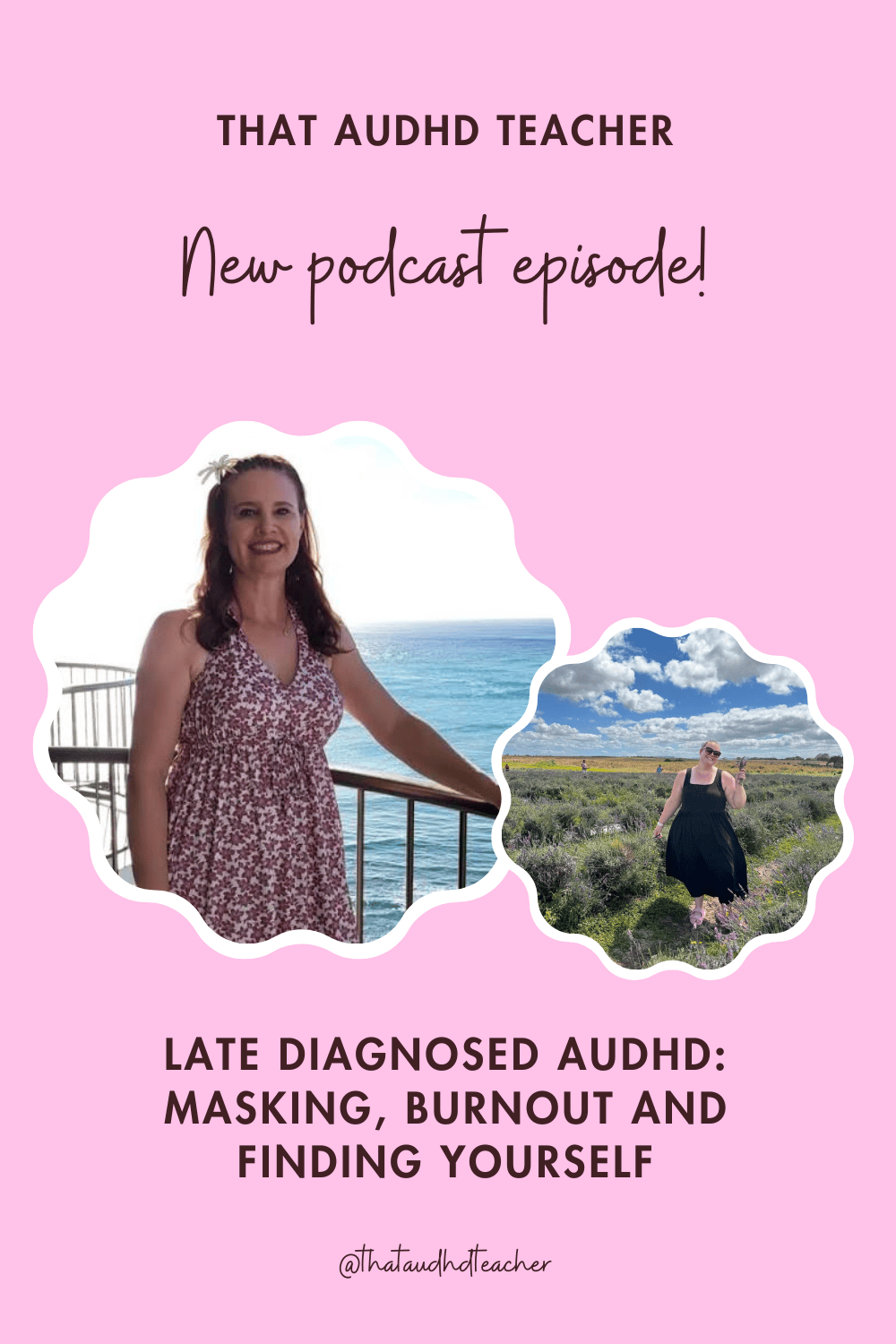
Listen to The That AuDHD Teacher Podcast
I explore late diagnosis, autism, ADHD, masking and the experiences that can be difficult to explain to other people on The That AuDHD Teacher Podcast.
Through personal reflections and conversations with guests, I talk about what it can be like to discover you’re neurodivergent later in life and begin making sense of your experiences.
If these topics resonate with you, you can find the podcast on Spotify and YouTube.
If this post brings up difficult feelings for you, you don’t have to work through them alone. Reaching out to someone you trust or a mental health professional can be a helpful next step.


Leave a Reply