What happens when you spend decades trying to fit in, pushing through things that feel difficult, and wondering why certain parts of life seem to come more naturally to everyone else, only to discover later in life that there is a reason you have always felt different?
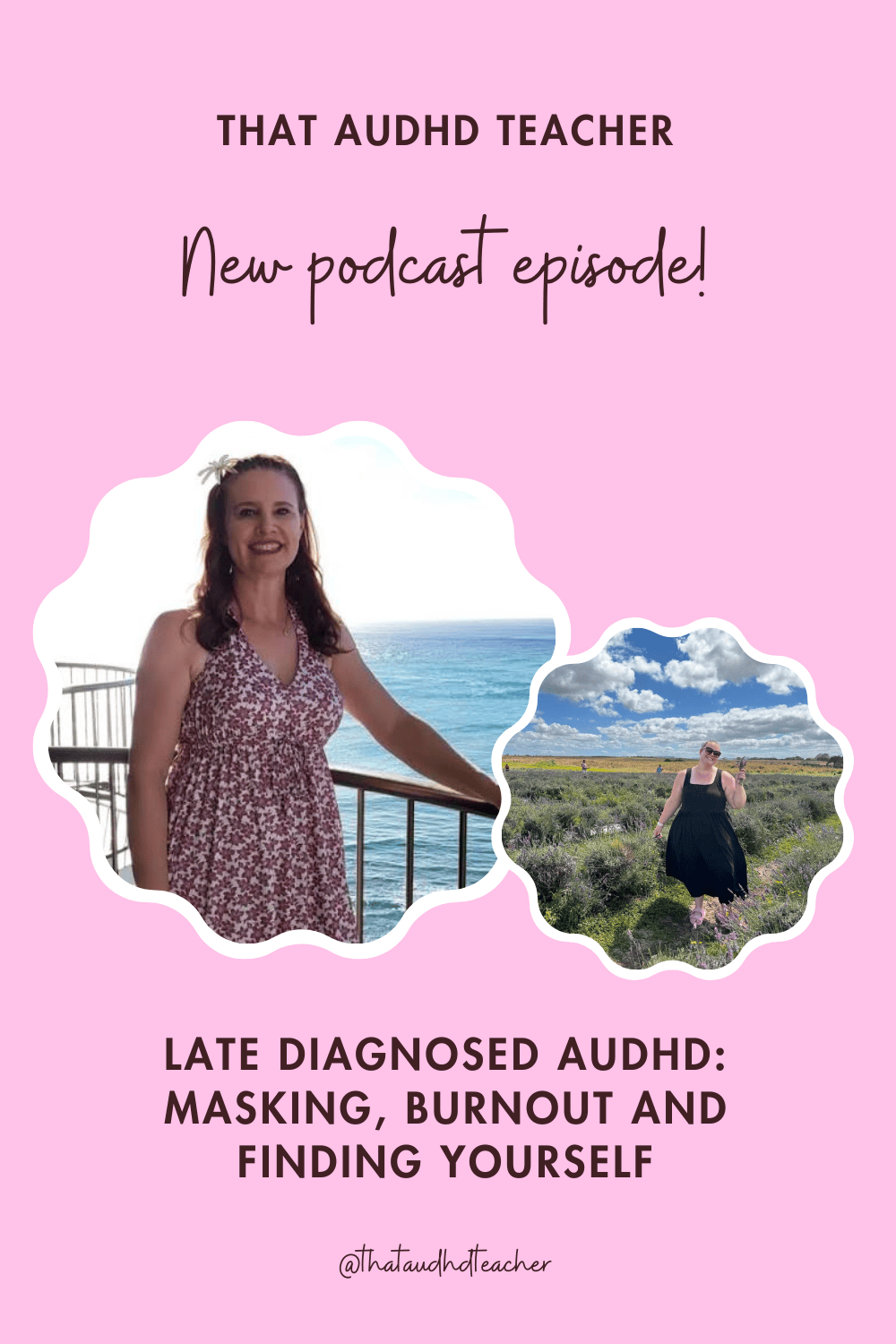
In the latest episode of That AuDHD Teacher, I’m joined by Dr Amanda Wilson, an orthodontist from Hawaii who received her autism and ADHD diagnoses at the age of 51. We have an honest conversation about late diagnosis, masking, autistic burnout and the complicated process of getting to know yourself all over again.
It’s a conversation about the things that start to make sense when you finally have a framework for understanding your brain, but also about the grief, uncertainty and unexpected challenges that can come with that understanding.
Listening to someone who understands
One of the things I find so valuable about conversations with other neurodivergent people is hearing how differently our lives can unfold while some of our experiences feel remarkably familiar.
Amanda and I come from different backgrounds and have different careers, but we talk about experiences that many late-diagnosed autistic and ADHD adults may recognise: trying to fit in, hiding parts of ourselves, pushing through difficulties and only later realising how much energy those things have taken.
Amanda shares what it was like growing up as a girl who desperately wanted to fit in, and how looking back through the lens of an autism and ADHD diagnosis has helped her reconsider experiences from her childhood.
Receiving a diagnosis later in life doesn’t change the past, but it can change how you understand it. Things that once seemed like personal shortcomings, confusing reactions or unexplained struggles can begin to look very different.
For some people, that realisation is an enormous relief. For others, it can bring up a whole mixture of emotions, sometimes all at once.
The hidden cost of masking
Masking is one of the major themes we explore in this episode.
For many neurodivergent people, masking involves consciously or unconsciously adjusting how we behave to fit the expectations of the people around us. It might mean suppressing natural behaviours, copying other people’s social interactions, monitoring how we come across or trying very hard not to appear different.
Sometimes, masking can help us navigate situations where we don’t feel understood or accepted. It can also become so familiar that we don’t fully recognise how much we’re doing it.
Amanda reflects on her experiences of trying to fit in and what it means to reconsider those behaviours after a late diagnosis.
One of the difficult things about masking is that other people might not see the effort involved. You can appear to be coping while using enormous amounts of energy to manage everyday interactions. You might even convince yourself that you’re managing well because you’ve become so practised at pushing through.
But what happens when you can no longer keep doing that?
AuDHD, burnout and reaching your limits
We also talk about autistic burnout and the ways prolonged pressure can affect your ability to function.
Burnout isn’t always as simple as feeling tired and needing a weekend off. For some neurodivergent people, it can affect their capacity to manage everyday demands, communicate, work and participate in activities that were previously manageable.
Amanda shares some particularly vulnerable experiences of reaching a point where speaking became difficult or impossible.
This is something I wanted to give space to in our conversation because experiences like these can be difficult to explain to people who haven’t lived through them. When you’re used to pushing yourself to meet expectations, recognising that you’ve reached your limits can be incredibly difficult.
It also raises questions about how we work, the environments we spend time in, the expectations we place on ourselves and whether the ways we’ve learned to cope are actually sustainable.
Amanda reflects on the challenges of navigating a demanding professional career while understanding her neurodivergence, and how difficult it can be when workplaces don’t necessarily recognise or accommodate different ways of functioning.
The grief that can follow a late diagnosis
A late diagnosis can be life changing, but that doesn’t mean every part of the experience feels positive.
Understanding yourself through the lens of autism and ADHD can bring relief, validation and a sense of belonging. At the same time, it can lead you to look back at your life and wonder what might have been different if you had understood yourself earlier.
You might think about the things you struggled with unnecessarily, the relationships that were difficult to navigate, the times you blamed yourself or the amount of energy you spent trying to meet expectations that didn’t suit you.
There can be grief for the younger version of yourself who didn’t have that understanding or support.
There can also be questions about identity. If you’ve spent years adapting yourself to fit in, who are you when you begin to let some of those adaptations go?
Amanda and I discuss some of the changes that can happen in friendships and relationships after diagnosis, including recognising your boundaries and reconsidering what you need from the people around you.
It’s a reminder that self-understanding isn’t always a straightforward journey from confusion to clarity. Sometimes, understanding more about yourself means having to reconsider quite a lot.
Why unmasking doesn’t always make life easier
There’s an idea that once you understand your neurodivergence, you can simply start unmasking and everything will feel better. In reality, it can be much more complicated.
If you’ve spent your life learning how to behave in ways that make other people comfortable, changing those patterns can feel unfamiliar. You might become more aware of your needs, less willing to push through discomfort or more conscious of how much certain situations demand from you.
Other people may also be accustomed to the version of you they’ve always known. When your behaviour or boundaries change, those relationships can change too.
Amanda’s experiences give us an opportunity to talk about the reality of this process, including how challenging it can feel when you begin to understand yourself differently but the world around you hasn’t necessarily changed with you.
For me, this is an important part of conversations about late diagnosis. Self acceptance matters, but so does recognising that we live and work in environments that don’t always make room for neurodivergent needs.
Sometimes, understanding yourself is only the beginning of figuring out what needs to change.
Finding new ways to communicate and express yourself
We also explore Amanda’s experiences as an orthodontist, the challenges of navigating work, and the role that creativity and technology can play in communication.
I particularly enjoyed being able to talk about the different ways people find outlets for their interests, ideas and experiences. Understanding your neurodivergence can lead you to reconsider not only the things you find difficult, but also the environments and approaches that help you thrive.
Technology can be one part of that picture, offering new ways to communicate and express ideas when traditional approaches don’t always feel accessible.
These conversations are a reminder that there isn’t one correct way to be neurodivergent, and there isn’t one correct way to navigate life after diagnosis.
We’re all working out what helps us, what drains us, and what it might look like to build a life that feels more sustainable.
Listen to the full conversation
I really appreciated the opportunity to speak with Amanda about her experiences and to explore the realities of late diagnosed AuDHD beyond the diagnosis itself.
We talk about masking, childhood experiences, burnout, grief, changing relationships, workplace challenges and what it means to begin understanding yourself differently later in life.
If you’re late diagnosed, questioning whether you might be autistic or have ADHD, or simply trying to make sense of why you’ve spent so much of your life feeling different, I hope this conversation helps you feel a little less alone.
Listen to the episode here:
If you listen, I’d love to know which part of the conversation resonated with you. Have you found that receiving a diagnosis has changed how you understand your childhood, your relationships or the way you approach everyday life?
You can share your thoughts in the comments or connect with me through That AuDHD Teacher.
That AuDHD Teacher is a podcast and blog exploring the realities of living with AuDHD, late diagnosis, masking, burnout, identity and navigating a world that doesn’t always make room for neurodivergent people. I’m Emily, an early childhood teacher from New Zealand, sharing experiences and conversations that help make sense of life with an AuDHD brain.


Leave a comment