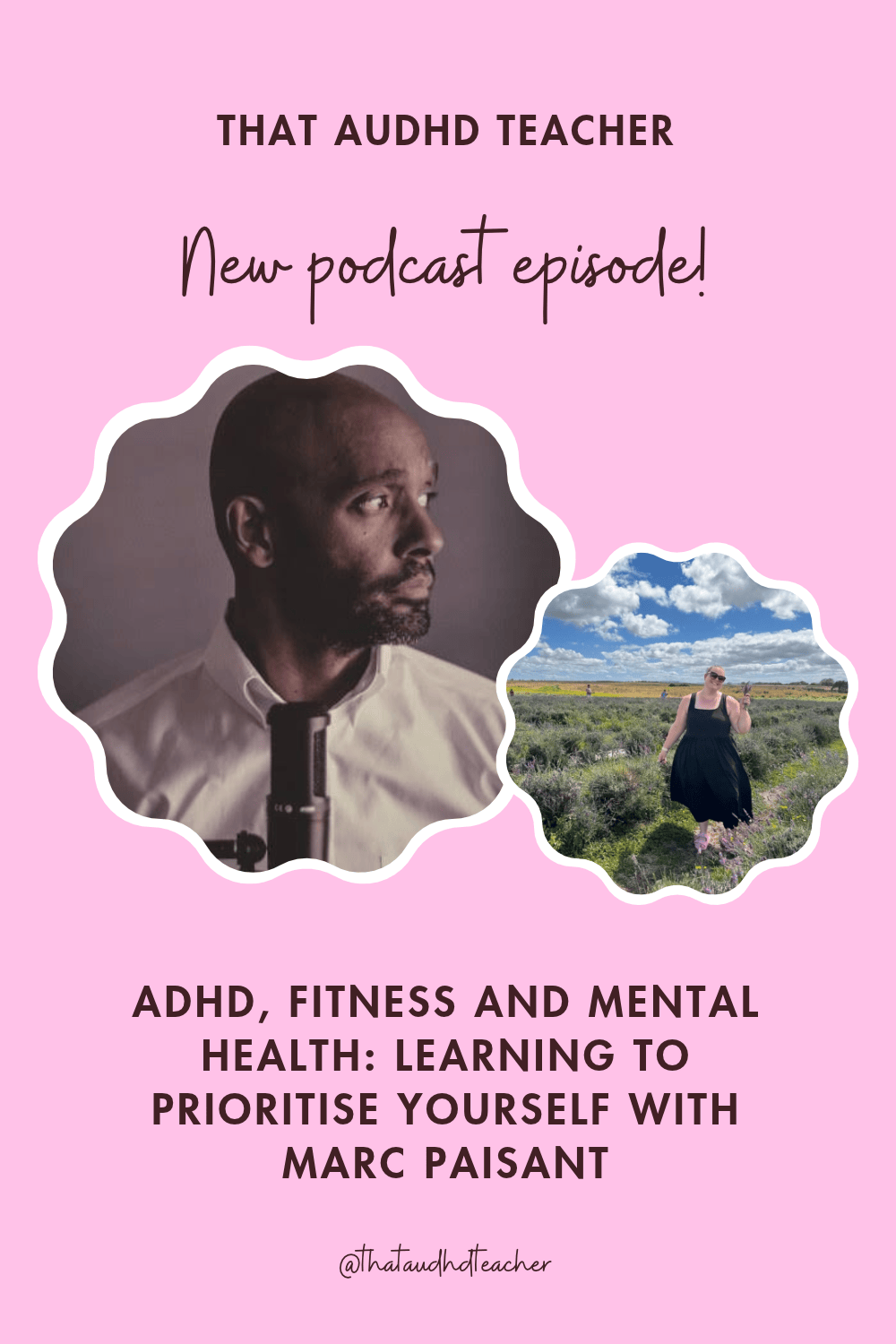
In a conversation with Marc Paisant on That AuDHD Teacher, we explore late ADHD diagnosis, emotional eating, mental health, fitness, self-worth and learning to prioritise ourselves.
There is a lot of conversation around the benefits of exercise for mental health. Moving our bodies can help us manage stress, improve our mood and support our overall wellbeing. But what happens when we start believing that getting physically fit will solve everything else, too?
In a recent episode of That AuDHD Teacher, I spoke with Marc Paisant about his experience of living with undiagnosed ADHD, his relationship with food, his mental health and the journey that eventually led him into fitness.
What stood out to me most was a point Marc made about the difference between looking after your physical health and looking after your mental health. They can absolutely influence one another, but one doesn’t automatically fix the other.
It was a conversation that touched on so many things that I think deserve more attention, particularly for adults navigating ADHD, emotional eating, self-esteem and the expectations we place on ourselves.
Recognising ADHD later in life
Marc’s experience of ADHD began long before he received a diagnosis. During his first year of high school, a teacher suggested to his mother that he might benefit from being assessed for ADD. However, his mother was defensive about the suggestion and felt that he simply needed to apply himself. The possibility was not pursued.
Marc continued through school and university, achieving reasonable grades. From the outside, there may not have appeared to be a significant problem. But he describes having difficulties with attention and retaining information, alongside a feeling that he was not keeping up in the same way as others.
It wasn’t until he was around 40 that a therapist encouraged him to speak with his doctor about ADHD. Receiving support changed the way he experienced everyday life. He describes the feeling of mental fog lifting and being able to direct his attention more intentionally.
His story is a reminder that ADHD does not always look the way people expect it to. Someone can achieve academically, hold a job and appear to be managing while still experiencing considerable difficulties internally.
A late diagnosis can provide a new way to understand experiences that have been confusing for years.
ADHD, food and emotional eating
Food was another significant part of our conversation. Marc spoke openly about how he used food in response to different emotions. When he felt depressed, angry or bored, eating could become an automatic response.
He described reaching a point where he was physically full but still wanted to continue eating because the experience felt good. It wasn’t necessarily about hunger.
This is something that can be difficult to explain to people who have not experienced it. Eating is not always simply a matter of deciding whether we are hungry or full. Emotions, habits, accessibility, sensory experiences and the way we seek comfort or stimulation can all influence our relationship with food.
We also discussed how important knowledge can be. Growing up, many of us received simplistic messages about food being either good or bad, without necessarily learning much about nutrition, our bodies or how to develop a sustainable relationship with eating.
For Marc, becoming more intentional about meals and paying attention to when and why he was eating helped him recognise patterns and make different choices.
It is important to acknowledge that ADHD and eating experiences are individual. There is no single approach that works for everyone, and food related difficulties can have many different contributing factors. However, having a better understanding of our own patterns can be a useful starting point.
Fitness doesn’t automatically heal your mental health
One of the most memorable parts of the interview was Marc’s reflection on losing a significant amount of weight and becoming physically fitter, only to realise that he was still struggling mentally. From the outside, his life appeared to be going well. He had a family, a home, a good job and had achieved a major physical transformation. Yet he wasn’t feeling the way he expected to feel.
When he returned to therapy, his therapist asked him whether he had thought that getting fit and losing weight would take care of everything else in his life. Marc’s answer was yes.
It was a moment of realisation. He had worked on his physical health and expected that work to resolve the difficulties he was experiencing emotionally. But, as Marc reflected, going to therapy had not automatically made him lose weight. So why had he expected the reverse to happen?
I thought this was such an important point. Exercise can be a valuable part of looking after our mental health, but it is not a replacement for therapy, support or addressing the underlying things that affect how we feel. We can be physically active and still struggle with anxiety, low self-esteem, negative self-talk or difficult experiences from our past. Both deserve attention.
Learning to forgive your former self
Marc also spoke about something that I think many people who experience significant changes in their health or lifestyle may relate to: still seeing yourself as the person you used to be. Despite losing weight and becoming fitter, Marc found that he continued to picture his former self. He was still carrying frustration and anger towards the person he had been. He described feeling angry about being overweight, not looking after himself and the choices he had made.
Through therapy, he began to recognise that he needed to forgive that version of himself. One exercise involved writing a letter to his former self, expressing the anger he had been holding and beginning to let it go.
This really stood out to me because it is possible to make changes in our lives while continuing to judge ourselves for the person we were before those changes happened. We can spend so much time trying to move away from our past that we forget to show compassion to the person who was living through it.
There is a difference between wanting to grow and believing that the person you used to be was somehow less deserving of kindness. We don’t have to hate our former selves to become different versions of ourselves.
Running towards stress rather than away from it
Marc’s fitness journey began with running. After years of playing sport, he had become less active and gained a significant amount of weight. He remembers going for a run in his early thirties and managing only half a mile before needing to stop.
Over time, he developed a routine, began strength training and found a genuine love for running. His journey was not without setbacks, including a foot injury and two surgeries that kept him away from running for an extended period. But one of the most interesting changes was not physical. It was how he began using exercise.
Initially, Marc would go for a run to escape stress. If something difficult happened at work, he would put it aside and go running so he didn’t have to think about it. But the stress was still there when he returned.
Eventually, he began approaching his runs differently. Rather than trying to avoid what was bothering him, he used that time to think about it. He would reflect on what was stressing him, identify his triggers and consider what he could do about the situation. He described this as running into the stress rather than running away from it.
I found this perspective particularly interesting because it highlights the difference between using exercise as a temporary distraction and using it as an opportunity to process our thoughts. Movement can give us space, but it doesn’t necessarily remove the things we need to work through.
Starting small and building sustainable habits
We also talked about something that I think many people struggle with: finding the time and motivation to look after themselves. Life is busy. Work, family, responsibilities and everyday tasks can make it feel difficult to fit exercise or other wellbeing routines into the day.
Marc’s advice was not to change everything at once. Instead, he suggested choosing one small thing and doing it consistently.
For someone wanting to become more active, that might mean going for a 10–15 minute walk three times during the first week. If that feels manageable, gradually increasing the number of days. The idea is to build a habit before adding more expectations.
I particularly liked his reminder that we don’t have to choose an activity simply because it is considered the best form of exercise. If you hate running, you don’t have to become a runner. The important thing is finding something you can realistically maintain.
Small changes can be much more sustainable than trying to overhaul your entire lifestyle overnight.
Prioritising yourself isn’t selfish
Towards the end of our conversation, Marc shared something that I think is worth remembering. He spoke about how, when he started prioritising himself, other areas of his life improved too. He felt he could be a better parent, partner, family member and friend because he was taking care of his own mental and physical wellbeing.
We often think about all the things we need to do for other people. It can feel uncomfortable to make time for ourselves, particularly when there are so many other responsibilities competing for our attention. But constantly giving everything to everyone else can leave very little for ourselves.
Looking after your own wellbeing is not selfish. It can be part of creating a life in which you have more capacity to show up for the people you care about. And it doesn’t have to begin with a dramatic change. Sometimes it starts with one walk, one appointment, one small habit or one decision to take your own needs seriously.
Listen to the full conversation
I really enjoyed this conversation with Marc. We explored ADHD, mental health, emotional eating, fitness, therapy, self-worth and the importance of making changes that are sustainable rather than trying to become a completely different person overnight.
You can find Marc and his work here:
- Website: https://marcpaisant.com/
- Relatively Normal podcast: https://podcasts.apple.com/us/podcast/relatively-normal/id1473698428
- Instagram: https://www.instagram.com/paisant_fitness/
Marc has also hosted the 6AM Run podcast and shares his work through its community.
You can listen to the full interview on That AuDHD Teacher.
This article reflects a personal conversation and lived experiences. It is not medical, mental health or nutrition advice. ADHD treatment, eating difficulties and exercise needs vary between individuals.




Leave a Reply