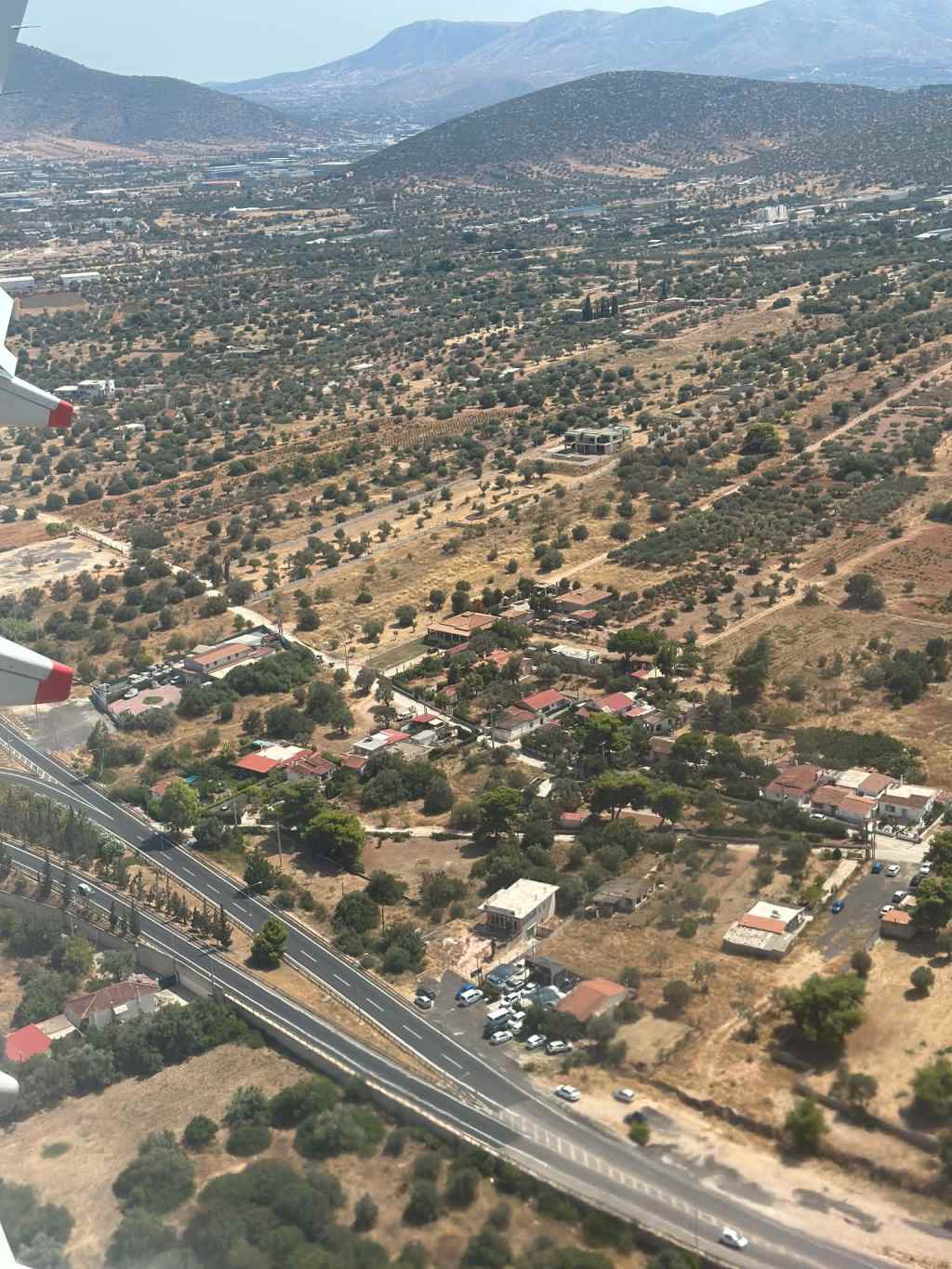
Living in New Zealand means that travelling to Europe takes a long time. A very long time. On the way to Europe, I spent around 27 hours travelling by plane. On the way home, it was around 24 hours of back to back flying. And while I love travelling, I am not someone who particularly enjoys long haul flights.
For me, flying involves a combination of sensory challenges, physical discomfort, motion sickness and the difficulty of being expected to sit in an economy seat for an extended period of time.
So what is it actually like to fly to Europe as an autistic traveller?
For me, it is a lot of preparation, a lot of sensory management and, thankfully, a sunflower lanyard that made some parts of the journey considerably easier.
I don’t like sitting still for that long
One of the hardest parts of flying for me isn’t actually the flying. It’s sitting. I find it difficult to sit in one position for a long time, particularly in an economy seat. I move around a lot. I like to cross my legs, change position, stretch and sometimes lie down.
Obviously, you can’t exactly do that comfortably in an economy seat for 12 hours. So one thing I decided to do was pay extra for bulkhead seats. The additional legroom makes a huge difference to me. I could stretch my legs out more easily and had more space to change position. It wasn’t a luxury purchase for me. It was something that made the physical experience of the flight significantly more manageable.
I also created a makeshift footrest using my backpack, pillows and blankets. It looked ridiculous. It worked brilliantly.
Sometimes travelling as a neurodivergent person involves accepting that the solution isn’t necessarily going to look elegant.
I travel with my own little survival kit
I don’t like relying entirely on the airline to make a long flight comfortable.
I take the things I know work for me.
My carry on included:
- my iPad with familiar shows and games
- downloaded podcasts
- noise cancelling headphones
- an eye mask
- a face mask
- hand sanitiser
- snacks
- a sudoku book
- sensory toys
- lollipops
- anti-nausea medication.
I also get motion sickness, so I make sure I have plenty of medication with me. Lollipops help me too, and I’ll ask for lemonade during the flight when I need it.
I don’t particularly enjoy aeroplane food either, so I make sure I’ve eaten properly before flying and bring snacks that I know I will actually eat.
I think this is an important part of travelling as a neurodivergent person: I know myself. I know what makes a long flight harder. And I know what makes it more manageable.
The sunflower lanyard made a difference
I didn’t tell the airline that I was autistic. I did, however, wear my sunflower lanyard for the entire journey. I was nervous about wearing it at first. There is something quite vulnerable about walking through an airport wearing a visible symbol that tells strangers you have a hidden disability.
But after this trip, I would absolutely wear it again. Most of the airports we travelled through recognised it. Some didn’t notice it unless I approached them first, and I wasn’t always comfortable walking straight to the front of a priority queue and announcing that I had a disability. But overall, it helped.
It meant I could use priority lines and, in some airports, board the plane earlier. And that made a real difference.
Athens Airport showed me what accessibility can look like
Athens was by far my standout experience. The airport was extremely busy. It was probably the busiest airport experience we had during the trip. And yet the accessibility support was incredible.
I didn’t even have to approach them. They saw my sunflower lanyard from a distance and came over to me. They explained where I needed to go. They told me I was a priority. They made sure I got to the first available desk, despite how busy the airport was. The whole process was calm, clear and respectful. And then I was able to use priority lines and board the plane first. For me, this is what accessibility should look like.
I didn’t have to fight for the accommodation. I didn’t have to repeatedly explain myself. I didn’t have to prove that I was disabled. Someone saw the identifier, understood it and helped. 1000/10. That experience genuinely made my journey easier. And perhaps most importantly, it made me feel comfortable wearing my sunflower lanyard.
Other airports were more mixed
Rome was okay. Barcelona was okay. London was okay. Other airports didn’t really make a significant difference either way.
Some recognised the lanyard immediately. Some didn’t unless I approached them. Some instructions could have been clearer. But overall, I found staff to be patient. And that matters.
Accessibility doesn’t have to mean that everything is perfect. Sometimes it is simply about having someone who is willing to slow down, explain something clearly and give you time.
I didn’t find quiet spaces specifically for neurodivergent travellers in the airports we used. There were family rooms and other spaces, but I didn’t find somewhere that I could reliably go simply because I was becoming overwhelmed.
Airport lighting is also what it is. It’s bright. Very bright. That’s one of those sensory challenges I don’t think can necessarily be solved, so I focus on managing it with the things I can control.
The plane itself is a different kind of challenge
Once I’m on the plane, I have my headphones. That makes a huge difference. I don’t find turbulence particularly difficult. It doesn’t really bother me. The noise is much more of an issue. I also don’t sleep very much on planes, so my strategy isn’t necessarily to force myself to sleep.
Instead, I make myself as comfortable as possible:
- Noise cancelling headphones.
- Eye mask.
- Familiar shows.
- Games.
- Podcasts.
- Sensory toys.
- Lollipops.
- Moving around as much as I reasonably can.
- And a makeshift footrest.
It’s not glamorous. But it works.
Then there was the flight home
The journey home was harder. Not necessarily because the flight itself was different, but because we were tired. We had been away for 29 days. When you’re travelling to Europe, there’s an excitement attached to the journey. You know that eventually you’re going to arrive and your holiday will begin. The journey home is different.
You’re going home. Back to normal life. Back to work. And you’re already exhausted from the trip. So 24 hours of flying feels very different from 27 hours of flying at the beginning of a holiday.
There was also one particular problem. We had paid extra for our seats because the additional space was important to me. Those seats were changed. At the last minute. And I didn’t cope well with that.
The unexpected change, combined with losing the legroom I had specifically paid for and relied upon, became too much.
I had a meltdown on the plane. And I think this is worth talking about because from the outside, a seat change might seem like a very small inconvenience.
But when you’ve spent a significant amount of time preparing yourself around a particular environment, a last minute change can have a much bigger impact.
It wasn’t simply: I don’t like this seat
It was: The thing I was relying on to make this experience manageable has suddenly disappeared
The first thing I did when we arrived
After 27 hours of travelling to Europe, we finally reached our hotel. And the first thing I did was have a shower.
For me, showering is part of my routine. It happens at a particular time, and when that routine is disrupted, I feel very off. So after that enormous journey, getting into the shower was the first thing I needed to do.
It sounds incredibly ordinary. But those ordinary routines can matter enormously when everything else around you is unfamiliar.
Would I wear the sunflower lanyard again?
Yes. Absolutely. I was nervous about wearing it before this trip. I’m not anymore. I would wear it anywhere while travelling. Because without it, there is no obvious way for someone to know that I have a hidden disability. And I don’t necessarily want to have to explain myself every time I need a little extra patience or support.
The lanyard doesn’t solve everything. It didn’t make every airport accessible. It didn’t stop me becoming overwhelmed. But when it was recognised, it made things considerably easier. And Athens showed me just how much of a difference that recognition can make.
What I wish airlines and airports understood
I don’t expect airlines to be able to accommodate every individual need. There are budgets, safety requirements, limited food options and physical limitations on an aircraft. I understand that.
But I do think there is value in making it easier for people to disclose their needs without feeling embarrassed.
For example, I have ARFID, and airline food isn’t something I particularly enjoy or feel comfortable relying on. I currently manage that by eating before I fly and bringing food with me.
But I do wonder what travel could look like if people with food related disabilities could disclose them more easily and be offered appropriate options where possible.
Not every accommodation will be possible. But knowing that you can ask matters.
So, would I do it again?
Yes. Because I love travelling. I just don’t think we should pretend that loving travel means travel is always easy. For me, travelling to Europe involves almost a full day in the air each way.
It involves sensory management. It involves planning. It involves knowing what I need to regulate myself. And sometimes it involves a meltdown when something changes unexpectedly. But it also involves arriving somewhere completely new. And for me, that’s worth it.
I think accessible travel should be about making that journey possible without expecting neurodivergent people to simply cope better. Sometimes we need extra space. Sometimes we need clearer instructions. Sometimes we need priority boarding. Sometimes we need to wear a sunflower lanyard. Sometimes we need to bring our own snacks and build a footrest out of a backpack. And sometimes we simply need someone to see us, recognise what we need and say: Come this way. I’ll help you.
That’s what Athens Airport did for me. And I’ll remember it for a very long time.



Leave a comment